
What Makes a Gym Feel Less Intimidating?
If you feel a bit unsure about walking into a gym, you are not the only one. For many people, the hardest part is not the workout itself. It is wondering whether they will know where to go, what to do, or whether they will feel out of place once they arrive.
That is why a good gym is not just about equipment. For people starting again, the right environment and guidance matter as much as the workout itself. A less intimidating gym feels calm, clear, and usable. You can get your bearings, ask a question without feeling awkward, and picture yourself coming back next week.
The goal of this article is reassurance. The way it gets there is through concrete clarity: by showing what a supportive, non-intimidating gym environment looks like in practice, it helps reduce anxiety and build confidence before you even step through the door. If you are searching for aquiet gym in Wellington, this is a practical way to judge fit beyond price lists or photos.
This is for people who want progress without pressure. Not hype. Not posturing. Just a space that makes it easier to begin and keep going.
What “good” looks like when you’re new or starting again
In this context, “good” means emotional comfort plus practical usability. It means a gym that helps a beginner or returner settle in quickly, understand what happens next, and train without feeling like they have to already know everything.
A welcoming gym environment does not need to be silent or perfect. It just needs to feel respectful, easy to navigate, and supportive enough that confidence can grow over time.
7 signs a gym feels supportive rather than intimidating
1. A calm, welcoming first impression
Good usually starts in the first few minutes. Check-in feels straightforward. Signage makes sense. Someone acknowledges you when you arrive. If you are visiting for the first time, you are not left standing there wondering what the process is.
Why it matters: uncertainty tends to peak at the start. A friendly, organised first impression can take the edge off straight away.
What to notice or ask: When you walk in, is it obvious where to go? Does someone greet you? If you asked, “It’s my first time here, what happens next?” would you likely get a clear answer?
2. Staff and coaches guide without hovering
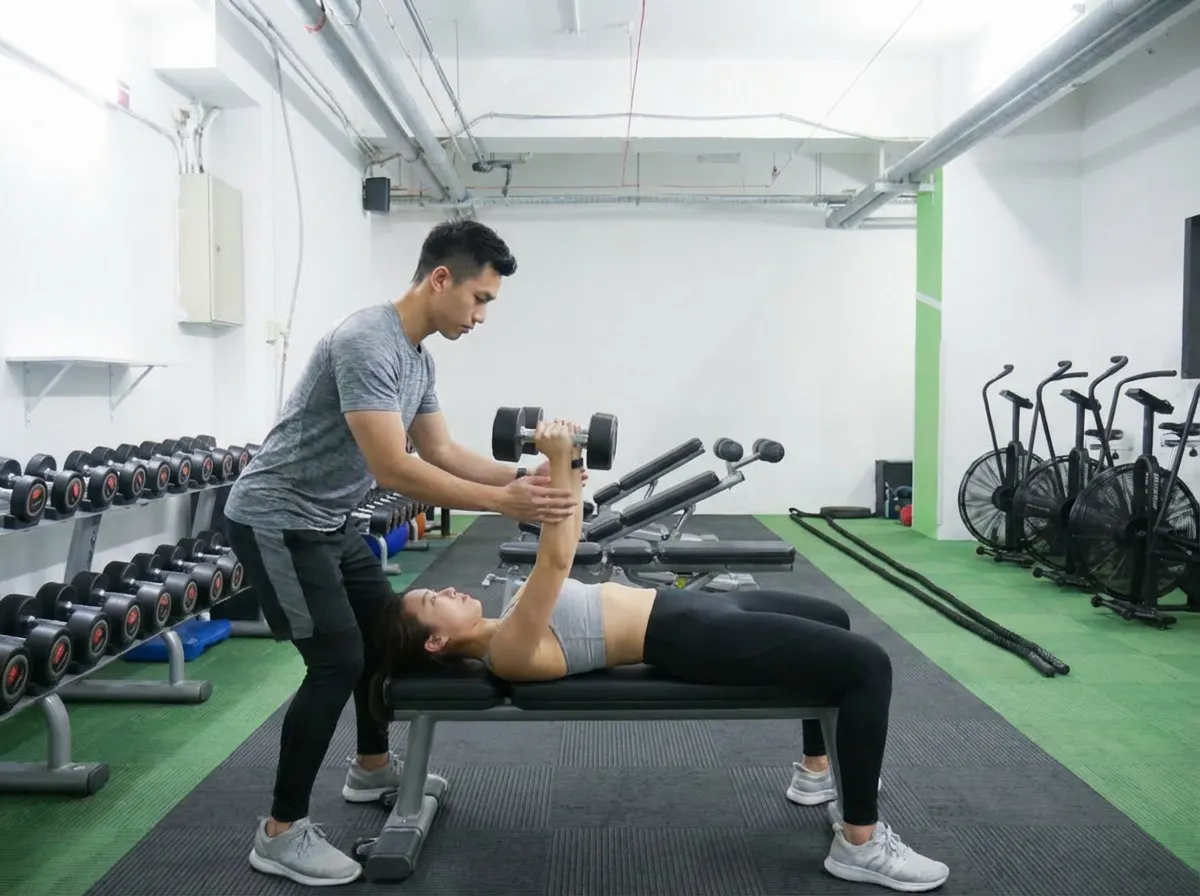
In a beginner-friendly gym, support feels available but not intense. Staff explain things clearly, answer questions respectfully, and help you use equipment without making you feel behind. They do not need to perform expertise. They just need to be useful and approachable.
Why it matters: for many people, confidence grows faster when help feels normal rather than loaded. Being able to ask a simple question without embarrassment makes a big difference.
What to notice or ask: Do staff look available? When they speak with members, does it seem calm and respectful? You could ask whether someone can show you how a machine or session works if you are new.
3. The layout is easy to understand
A less intimidating gym often has a layout that makes sense at a glance. Equipment is grouped logically. There is enough space to move around. The room does not feel chaotic or hard to read.
Why it matters: when you can work out where things are, your brain has less to process. That makes it easier to focus on the session instead of the social pressure of not knowing where to stand or what to do.
What to notice or ask: Can you quickly tell where cardio, weights, and open space are? Does the space feel manageable? Is there room for people to move without everything feeling crowded?
4. There are options for different starting points
Good gyms do not assume everyone is already confident. They offer entry points. That might look like beginner-friendly classes, scaled exercise options, a simple programme pathway, or one-to-one guidance for your first few visits.
Why it matters: most people do better when they have a starting point that matches their current level. It is easier to keep showing up when the gym meets you where you are.
What to notice or ask: Are there options for complete beginners or people returning after time away? If a class or programme feels too advanced, is there a simpler version?
5. The atmosphere feels focused, not performative
This is one of the biggest differences. In a supportive gym in Wellington, people often seem to be getting on with their own sessions rather than turning the room into a stage. The energy feels settled. Noise levels are manageable. You are less likely to feel watched.
Why it matters: many people are not afraid of movement itself. They are worried about comparison. A calm gym atmosphere makes it easier to focus on your own session instead of everybody else.
What to notice or ask: Does the space feel showy or relaxed? Are people training without creating a big scene around themselves? Could you picture yourself concentrating there?
6. Onboarding is clear and simple
A good first experience includes clear guidance about what happens next. That might be an intro session, a quick tour, a basic explanation of how things work, or a simple recommendation for where to begin.
Why it matters: uncertainty after visit one is often where momentum drops away. Clarity helps people return because they know the next step is manageable.
What to notice or ask: Is there a first-visit process? Will someone talk you through the space? If you joined, what would your first week realistically look like?
7. Progress is framed realistically
In a less intimidating gym, progress is usually talked about in steady, useful terms: building a routine, learning technique, feeling more capable, improving energy, and noticing small wins. The tone is practical rather than extreme.
Why it matters: pressure-heavy messaging can make people feel they need to prove something straight away. A more grounded approach supports consistency, which is often what helps confidence grow.
What to notice or ask: How does the gym talk about progress? Does the language sound sustainable and supportive, or does it rely on shame, urgency, or dramatic transformation promises?
Red flags to watch for on your first visit
Not every gym will suit every person, and that is fine. The point is not to judge a space harshly. It is to notice whether it feels workable for you.
Staff seem too busy or uninterested in helping beginners.If asking a basic question feels like an interruption, that can make a first visit harder than it needs to be.
The space feels cliquey or performative.If the vibe suggests you already need to know the culture to fit in, many newcomers will find it harder to relax.
There is no clear process for a first visit.If you cannot tell where to go, who to speak to, or what happens next, the uncertainty can overshadow everything else.
Messaging leans on shame, extremes, or transformation pressure.That style can make progress feel like a test rather than a process.
Everything appears designed for confident regulars only.If there are no obvious beginner entry points, some people may struggle to imagine how they would start.
Noise, crowding, or confusion makes it hard to settle in.Even a well-equipped gym can feel unsuitable if the environment keeps you on edge.
A quick self-check before you join
If you are comparing options, these questions can help you decide whether a gym feels right for you:
Do I know what will happen when I arrive?
Would I feel comfortable asking for help here?
Does this space seem to welcome different experience levels?
Can I picture myself returning next week?
Does the atmosphere help me focus rather than compare?
If most of those answers are yes, that is often a good sign. If not, it may simply mean the fit is wrong, not that you are.
Choosing a quiet gym in Wellington starts with fit
If you are looking for a quiet gym in Wellington, it is worth paying attention to how a space feels as much as what it contains. The right environment will not do the work for you, but it can make the work feel much more approachable.
For many people, that is what supports real progress: a place that feels calm enough to begin, clear enough to understand, and welcoming enough to return to. Confidence does not always come first. Often, it grows because the setting gives it room to.
If you are exploring your options, take a low-pressure first step.
Visit the space, ask what a first visit looks like, and notice whether you feel at ease. A good gym should make it easier to start, not harder.